
The USER JOURNEY tool is a design method that allows observation and understanding of how a space is actually experienced by those who live in or use it daily. Its goal is to analyze real user experiences, identify pain points and needs, and uncover concrete opportunities for improving how spaces are used.
Starting from the floor plan, each learner is guided in mapping the paths, actions, and interactions that occur within the space.
The approach is simple but powerful: before transforming or furnishing a space, it is essential to understand how it is used day-to-day, its potential, and its limitations.
Often, design starts from a functional or aesthetic vision of a space. This tool flips that perspective, beginning with real life as it unfolds in the environment and taking into account both expressed and implicit needs, in order to produce design solutions that are more empathetic, coherent, and tailored.
The mapping process is centred on a user journey tool, which can be printed on A3 sheets or, preferably, reproduced on a large ruled sheet or roll of paper to allow more space for collaboration, post-its, and annotations. A floor plan of the space to be redefined is used as a supporting element and can be attached to the user journey surface or developed separately on an A3 sheet. This purpose is to race flows, note pain points, specify user needs, and highlight design opportunities.
This methodology draws inspiration from Design Thinking and Human-Centered Design, where the user is not a passive observer but an active participant in rethinking the space.
Why is it a fundamental tool in design?
Every environment – a home, a room, an educational facility, or a workplace – serves specific functions: resting, cooking, hosting people, working, taking care of oneself or others. However, there can be significant gaps between the intended functions and how the space is used: underutilized areas, barriers to use, lack of comfort or privacy, excessive stimuli, or unmet and unnoticed needs.
- The USER JOURNEY tool makes visible what often remains implicit, such as:
- Where congestion or stress points occur (e.g., “everyone passes through the same spot at the same time”);
- Which areas are underused or avoided, and why;
- Where comfort, well-being, and safety are achieved, and where discomfort or frustration arises;
- Which functions are missing or could be improved (e.g. a reading nook, relaxation zone, or social area);
- How daily habits and routines influence the way spaces are used;
- How social interactions are distributed within the environment (e.g., shared versus private spaces).
All of this information becomes valuable material for designing, renovating, or improving a space in a targeted, realistic and user-centred way.

A concrete method for designing from lived experience
The strength of the USER JOURNEY tool lies in its ability to transform personal experiences into visual, tangible insights. Using colored post-its, traced lines, keywords, symbols, and visual codes, it is possible to map:
- everyday routes and movements;
- moments of tension, conflict, or difficulty;
- desires and ideas for change;
- emotions connected to different areas of the space.
The result is not just a sheet filled with sketches and notes, but a true experiential map – a visual story that reveals how a space is lived in, by whom, and with what expectations.
This process is particularly valuable in co-design settings, especially when working with vulnerable groups, families, educational communities, or public environments that need to accommodate a wide range of needs and experiences.
Design applications
Once the USER JOURNEY is completed, the designer can:
- Design new furniture or spatial layouts that better support users’ needs;
- Engage users in the renovation process, creating environments that are truly tailored to the people who live and interact within them.
- Adapt materials, lighting, colors, and acoustics to match the real needs of users;
- Spot low-cost opportunities for improvement;
- Identify areas to be enhanced, such as social spaces, quiet zones, or congested passageways;
An accessible and adaptable tool
The USER JOURNEY tool does not require advanced technical skills – it is accessible, intuitive, and highly adaptable. Anyone can take part according to their own expressive and cognitive abilities, making the tool suitable for educational and social contexts.
The use of simple materials allows for immediate replication in different environments, even without specialized equipment or technology.
A practical lens for understanding everyday life
Every line drawn, every note written, and every symbol chosen captures an authentic snapshot of the relationship between people and space. The information collected is not treated as rigid data, but as narrative and design cues – subtle insights that often reveal far more than an interview or questionnaire ever could.
The tool nurtures empathy in design, helping to understand how people move through a space, what they look for, where they feel discomfort, and where they find a sense of ease or belonging. It is particularly valuable in renovation and spatial regeneration projects, as it provides a realistic picture of how spaces are truly experienced – uncovering unspoken needs, hidden desires, and opportunities for meaningful improvement.

Easily adaptable and scalable
The tool can be expanded or customized depending on the target group, the complexity of the environment, or the desired level of exploration. Materials can be modified – for example, with visual symbols, guiding questions, or more intuitive colors – to make them accessible to users with vulnerabilities or in multicultural contexts.
At the same time, the modular nature of the activity allows it to be used in training, co-design, educational support, or participatory design processes.
Ready to use, easy to replicate
The insights gathered during the activity can be shared visually or verbally, giving voice to individual experiences and generating new design possibilities grounded in the reality of everyday living. Within the training programme, the USER JOURNEY activity is first introduced during the theoretical phase, where learners are invited to apply it to spaces they know well or live in, using their own daily experience as a starting point.
The USER JOURNEY tool has been conceived as both an operational and reflective instrument, designed to support the learners of this training course in a concrete and symbolic exploration of how spaces are truly inhabited. It goes beyond collecting technical information about floor plans or functional routes – it reveals a lived map composed of daily gestures, difficulties, habits, emotions, and social interactions.
By completing the template, learners are guided to visualize their relationship with the space: where they move, where they stop, which areas they engage with most, where they encounter discomfort or conflict, and which corners provide well-being, safety, or autonomy. This first application helps learners develop awareness, empathy, and confidence in observing and interpreting spatial experiences.
Every line drawn, color chosen, and comment left on the sheet represents a form of self-awareness about how one experiences the space and what could be transformed to make it better suited to personal needs.
The tool is grounded in a participatory design approach: it is not the designer who defines what is “right” for the user, but the user who provides valuable guidance on what works, what is missing, and what could be improved. This approach is further reinforced when the activity is carried out again in real living environments shared by vulnerable people, actively involving them as final users of the spaces.

The tool does not focus on judgment or performance, but on reconstructing spatial and perceptual experience. For this reason, it can be used in a wide variety of contexts – educational, social or therapeutic – and with users of different ages, cultures, and abilities. The USER JOURNEY tool supports a gradual shift from self-exploration to user-led spatial improvement.
A bridge between lived experience, emotion, and space
Space is not neutral: It shapes behavior, welcomes or excludes, enables certain actions, and constrains others. This tool helps interpret space through everyday experience, translating the architectural plan into an emotional landscape made of actions, paths, relationships, needs, and latent potential.
Every element that emerges during the activity – a winding route, a point of congestion, an avoided area, a recurring phrase, or an unspoken need – should not be read as a fixed rule or standardized data. Instead, it functions as a meaningful cue, guiding design decisions toward solutions that are more coherent, inclusive, and sustainable.
Qualitative indicators useful for design
During the activity, the learner collects a series of meaningful observations, such as:
- Pain points: areas where critical issues are concentrated (clutter, conflicting uses, discomfort, overcrowding).
- User needs: implicit or explicit needs, such as the desire for privacy, orientation, social interaction, containment, or accessibility.
- Opportunities: potential improvements related to lighting, materials, furniture layout, or the distribution of functions.
- Recurring actions: daily routines that require better spatial support (e.g., chaotic circulation areas, absence of buffer zones or decompression spaces).
- Underused areas: spaces that are rarely or never inhabited and could be reactivated.
- Symbolic zones: places that carry emotional or ritual meaning, even if they are not “functional” in a strict sense.
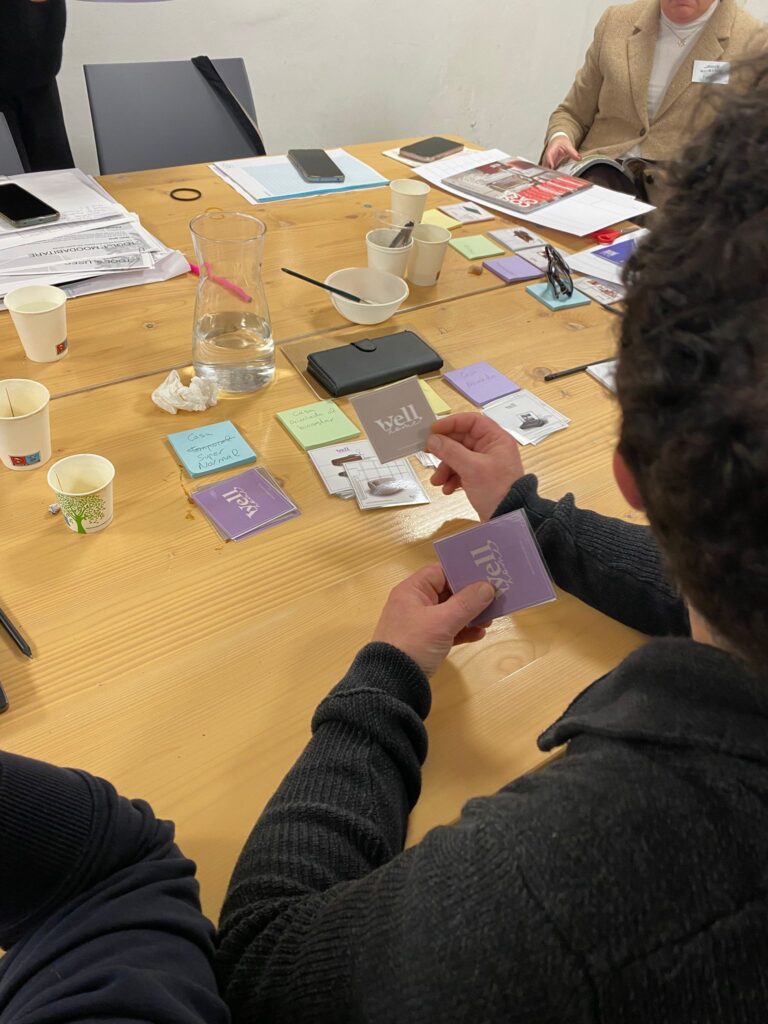
Taken together, these qualitative indicators form a layered reading of space that goes beyond measurable parameters. They reveal how environments are actually experienced, appropriated, and negotiated over time. Rather than producing definitive answers, the indicators open up design questions, supporting the identification of priorities, tensions, and latent possibilities.

Made with love by Wellhome team
Funded by the European Union. Views and opinions expressed are however those of the author(s) only and do not necessarily reflect those of the European Union or the European Education and Culture Executive Agency (EACEA). Neither the European Union nor EACEA can be held responsible for them.